For homeowners looking to insulate themselves from rising energy costs, the debate has moved beyond "should I get a battery?" to "which battery should I get?" As of early 2026, two titans dominate the British market: the Tesla Powerwall 3 and the GivEnergy All-In-One.
With the new government Warm Homes Plan providing fresh incentives for domestic storage, making the right choice is essential for long-term ROI. In this guide, we'll break down the specs, the real-world performance, and the common mistakes to avoid.
Understanding the Landscape: Why Solar Batteries Matter More Than Ever
The UK's energy market is in constant flux, with fluctuating wholesale prices, the phasing out of traditional Feed-in Tariffs (FiT), and the rise of flexible Smart Export Guarantee (SEG) rates. In this environment, a solar battery storage system is no longer just about storing excess solar generation for evening use. It's about:
- Maximising Self-Consumption: Using more of the free electricity you generate, rather than exporting it at low SEG rates and buying expensive grid electricity back later.
- Time-of-Use Optimisation: Charging your battery when electricity is cheap (e.g., overnight on an off-peak tariff) and discharging it during expensive peak times, even if you don't have solar panels.
- Grid Stability & Blackout Protection: Providing a backup power source for critical circuits during power cuts (with the right setup).
- Reducing Carbon Footprint: Further decreasing reliance on fossil fuel-generated electricity from the grid.
- Future-Proofing: Preparing for potential future changes in energy tariffs and smart grid integration.
Both Tesla Powerwall 3 and GivEnergy systems are designed to deliver these benefits, but in distinct ways.
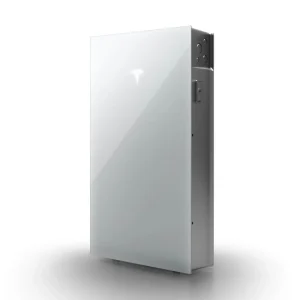
Tesla Powerwall 3: The Evolution of an Icon
Tesla effectively popularised residential battery storage with its Powerwall series. The Powerwall 3 builds upon its predecessors, offering a more integrated and powerful solution that aims to simplify the entire home energy management system.
Key Features & Specifications of Powerwall 3
- Integrated Hybrid Inverter: This is the most significant upgrade. The Powerwall 3 now incorporates a 50kW inverter directly within the battery unit. This means it can connect directly to your solar panels and the grid, simplifying installation and potentially reducing the need for a separate solar inverter for new installations or replacements.
- Larger Capacity: Offers a robust 13.5 kWh of usable capacity per unit, making it suitable for most medium- to large-sized homes.
- Higher Power Output: Provides a continuous power output of 11.5 kW, significantly higher than its predecessors and most competitors. This means it can power more appliances simultaneously during a grid outage.
- Scalability: Multiple Powerwall 3 units can be stacked for even greater capacity and power, up to four units for a total of 54 kWh.
- Liquid Cooling: Tesla's advanced thermal management ensures optimal performance and longevity, especially during high charge/discharge cycles.
- Seamless Integration with Tesla Ecosystem: Naturally integrates with Tesla solar panels, electric vehicles (EVs), and the intuitive Tesla app for monitoring and control.
- Outdoor Rated: Designed for both indoor and outdoor installation, offering flexibility for homes with limited internal space.
- Backup Gateway: The optional Tesla Gateway provides automatic blackout protection, seamlessly switching your home to battery power when the grid goes down.
Benefits of Powerwall 3
- Simplified Installation: The integrated inverter can streamline the setup process, potentially reducing labour and hardware costs.
- High Performance: The substantial power output means fewer limitations on what appliances you can run during battery discharge, including high-demand items.
- Brand Reputation & Aesthetics: Tesla's strong brand and sleek design appeal to many.
- Advanced Software & App: The Tesla app is renowned for its user-friendliness, detailed energy monitoring, and smart charging features.
- Excellent for Tesla EV Owners: Unbeatable integration if you already own a Tesla electric vehicle, allowing for optimised home charging directly from your solar and battery system.
Potential Drawbacks of Powerwall 3
- Premium Price Point: Generally, Tesla products come with a higher upfront cost.
- Closed Ecosystem: While powerful, it can be less flexible if you prefer to mix and match components from different manufacturers or already have an existing non-Tesla solar inverter you wish to retain.
- Installer Network: As the network grows, the pool of certified Tesla Powerwall installers might be smaller or have longer lead times than in more open systems in the UK.
- Grid Integration: While it has an integrated inverter, ensuring full compatibility with the specific grid connection rules and DNO (Distribution Network Operator) requirements in the UK still requires careful planning by a qualified installer.
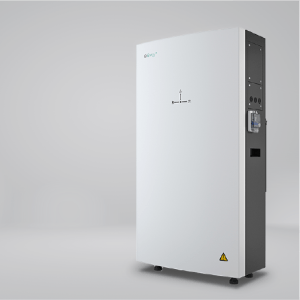
GivEnergy: The UK's Homegrown Contender
GivEnergy has rapidly become a household name in the UK solar and battery storage market. Founded with a clear focus on the British consumer, they offer a comprehensive range of inverters, batteries, and monitoring solutions designed specifically for UK energy demands and grid conditions.
Key Features & Specifications of GivEnergy
- Modular & Flexible Solutions: GivEnergy offers a range of hybrid inverters (e.g., Gen 3 Hybrid, All-in-One) and scalable battery modules (from 2.6 kWh to 9.5 kWh per module) that can be combined to suit various needs and budgets.
- Excellent Compatibility: Their inverters are renowned for their compatibility with existing solar PV systems and a wide range of solar panels, making them ideal for retrofitting.
- High Depth of Discharge (DoD): GivEnergy batteries typically offer a 90% DoD, allowing you to use almost all of their stored energy before recharging.
- Advanced Monitoring & Control: The GivEnergy app and online portal provide robust, real-time data, allowing users to track generation, consumption, battery status, and even set smart charging schedules.
- EPSS (Emergency Power Supply System): Many GivEnergy hybrid inverters feature an integrated EPSS, providing essential backup power to a dedicated circuit during grid outages.
- UK-Based Support: A significant advantage for customers is the readily available, UK-based technical support and customer service.
- Competitive Pricing: GivEnergy generally offers a very strong price-to-performance ratio, making it an accessible option for many homeowners.
- V2L (Vehicle-to-Load) / V2H (Vehicle-to-Home) Potential: With certain inverter models, GivEnergy is actively developing solutions for future EV integration, allowing your EV to potentially power your home.
Benefits of GivEnergy
- Flexibility & Customisation: You can build a system tailored precisely to your energy usage, budget, and existing solar setup.
- Cost-Effectiveness: Often provides a lower entry point and competitive overall cost, delivering excellent value.
- Retrofit Friendly: A superb choice if you already have solar panels and want to add battery storage without replacing your existing inverter.
- Strong UK Support & Warranty: Local presence means easier access to technical assistance and quicker resolution of any issues.
- Open Protocol: More open to integration with third-party components and smart home systems.
- Excellent for Diverse Home Sizes: With modular battery options, it scales effectively from smaller flats to larger family homes.
Potential Drawbacks of GivEnergy
- Separate Components: Unlike Powerwall 3's integrated approach, you typically have separate inverter and battery units, which can mean a slightly more complex installation for new systems or require more wall space.
- Power Output: While robust, the continuous power output of a single GivEnergy system may be lower than that of a Powerwall 3, depending on the inverter and battery configuration. This is less critical for most homes but important for high-demand loads during outages.
- Aesthetics: While functional, the separate components might not have the same sleek, unified aesthetic as a Powerwall 3.
- Software Sophistication: While excellent, the app and algorithms might not be as advanced or as seamlessly integrated with a broader energy ecosystem as Tesla's, particularly for advanced EV charging optimisation.
Head-to-Head Comparison: Powerwall 3 vs GivEnergy
Specifications
| Feature | Tesla Powerwall 3 | GivEnergy All-In-One (Gen 2) |
|---|---|---|
| Usable Capacity | 13.5 kWh | 13.5 kWh |
| Max Continuous Power | 11.5 kW | 6.0 kW (Standard) / 12kW Peak |
| Inverter | Integrated Hybrid (11.04 kW) | Integrated Hybrid |
| Chemistry | LFP (Cobalt-Free) | LFP (Cobalt-Free) |
| UK Warranty | 10 Years | 12 Years |
| Outdoor Rating | IP67 (Superior) | IP65 (Standard) |
Let's break down the key areas of comparison to help you weigh your options.
Integration & Inverter Strategy
- Tesla Powerwall 3: Features an integrated 50kW hybrid inverter. This means it can connect directly to your solar panels and the grid. For new solar installations or if you're replacing an old inverter, this simplifies the system dramatically. If you have an existing solar system with a working inverter, the Powerwall 3 can also be installed as an AC-coupled system, working alongside your current inverter.
- GivEnergy: Typically uses separate hybrid inverters (e.g., Gen 3, All-in-One), which then connect to modular battery packs. This offers fantastic flexibility. If you already have solar panels with a string inverter, a GivEnergy hybrid inverter can be easily retrofitted to add battery storage (AC coupling). If you're starting from scratch, a DC-coupled GivEnergy system (solar panels -> GivEnergy hybrid inverter -> batteries) is highly efficient.
FitSolar Insight: Powerwall 3's integrated inverter is a game-changer for new installations or full system upgrades, offering a 'one-box' solution. GivEnergy excels in its flexibility for retrofitting existing solar arrays and its modularity, enabling highly tailored capacity.
Capacity & Scalability
- Tesla Powerwall 3: Offers a fixed usable capacity of 13.5 kWh per unit. You can stack up to four units for a maximum of 54 kWh. This suits homes with significant energy demands.
- GivEnergy: Highly modular. Batteries come in sizes like 2.6 kWh, 5.2 kWh, and 9.5 kWh, and can be combined to create systems ranging from a small 2.6 kWh to over 20 kWh, depending on the inverter. This allows for precise tailoring to your daily energy consumption.
FitSolar Insight: If you need a large, fixed capacity, Powerwall 3 is straightforward. If you prefer to start smaller and expand, or want a highly specific capacity, GivEnergy's modularity is a clear winner.
Power Output & Backup Capabilities
- Tesla Powerwall 3: Delivers an impressive 11.5 kW continuous power output, making it exceptionally capable of running multiple high-demand appliances (like kettles, showers, or ovens) simultaneously during grid outages. Its backup solution via the Tesla Gateway is seamless.
- GivEnergy: Power output depends on the specific hybrid inverter chosen. For example, a GivEnergy All-in-One system might offer 6kW continuous output, which is ample for most homes but less than Powerwall 3. The EPSS function provides backup to a designated circuit for essential loads during outages.
FitSolar Insight: For sheer power output and the ability to run almost your entire home during a blackout, Powerwall 3 has the edge. GivEnergy provides excellent practical backup for essential circuits, which is sufficient for most households.
Efficiency
- Round-Trip Efficiency (RTE): This measures how much energy is recovered from the battery. Both brands offer excellent RTE. Tesla Powerwall 3 typically boasts an RTE of 90-91%. GivEnergy systems also perform very well, with their batteries often quoted at around 90% RTE.
- Inverter Efficiency: The efficiency of the integrated or separate inverter is crucial. Both Tesla and GivEnergy use high-quality components to minimise energy losses during conversion.
FitSolar Insight: Both systems are highly efficient. Any differences will be marginal in real-world energy savings.
Monitoring & User Experience (App)
- Tesla Powerwall 3: The Tesla app is renowned for its sleek interface, intuitive design, and comprehensive real-time data. It seamlessly integrates with other Tesla products (solar, EV charging) and offers advanced smart scheduling.
- GivEnergy: The GivEnergy app and online portal are highly functional, providing detailed insights into solar generation, home consumption, battery state of charge, and grid interaction. It allows for advanced scheduling and customisation tailored to UK tariffs.
FitSolar Insight: Both offer excellent monitoring. Tesla's app often has a slight edge in aesthetics and ecosystem integration for Tesla users. GivEnergy's app is incredibly practical and powerful for energy management in the UK.
Warranty & Longevity
- Tesla Powerwall 3: Typically comes with a 10-year warranty, guaranteeing a certain percentage of its original capacity (e.g., 70%) after 10 years, or a specific number of cycles.
- GivEnergy: Also offers a strong 10-year warranty on their batteries and inverters, with similar guarantees on capacity retention.
FitSolar Insight: Both offer industry-standard, robust warranties, providing good peace of mind for a decade of operation.
Cost & Value for Money
- Tesla Powerwall 3: Expect a higher upfront investment. The integrated inverter might offset some of the costs of a separate inverter, but the premium branding and advanced technology come at a price.
- GivEnergy: Generally offers a more competitive price point, especially when considering the capacity provided. Modularity can also enable a staged investment, starting small and expanding later.
FitSolar Insight: GivEnergy often offers superior value for money per kWh, making it a very attractive option for budget-conscious homeowners. Tesla's value proposition often leans on its integrated ecosystem and premium features. Remember, the 0% VAT on solar and battery storage significantly reduces the overall cost for both.
The UK Market Advantage: Why GivEnergy Thrives Here
GivEnergy's success in the UK isn't just about price; it's deeply rooted in its understanding of the UK market:
- Local Support: UK-based customer service and technical support are invaluable. Quick access to spare parts and expertise can make a huge difference if issues arise.
- DNO Compatibility: GivEnergy systems are designed with UK DNO requirements in mind, making the application process smoother for installers.
- Retrofit Focus: A large proportion of solar homeowners are looking to add batteries to existing systems. GivEnergy's flexible AC-coupled solutions are perfectly suited for this.
- Flexible Tariffs: GivEnergy's software is highly adept at optimising charging and discharging around complex UK Time-of-Use tariffs (e.g., Octopus Energy's Agile, Go, Flux).
- Installer Familiarity: Many solar installers are highly familiar with GivEnergy products, leading to more efficient, potentially cheaper installations.
The Pitfalls of Getting It Wrong: What to Avoid
Choosing and installing a solar battery system is a significant investment. Here are common mistakes homeowners make:
Undersizing/Oversizing:
- Too Small: You won't store enough solar energy, and you'll still buy expensive grid electricity. You won't get the desired savings.
- Too Large: You pay for capacity you don't use. Your battery often sits full, waiting for demand that never arrives, unnecessarily extending your payback period.
- Solution: Conduct a detailed energy audit. Understand your daily consumption patterns (peak usage, night usage). A FitSolar expert can help you calculate the ideal battery size based on your specific needs and solar generation.
Poor Inverter Matching:
- Incorrect Compatibility: If you have an existing solar system, buying an incompatible battery or inverter means it won't work, or you'll need expensive re-wiring.
- Suboptimal Efficiency: Pairing a highly efficient battery with a low-efficiency inverter will negate some of your savings.
- Solution: Always consult with a qualified solar installer. They will ensure your new battery system integrates seamlessly and efficiently with your existing solar PV and home electrics.
Ignoring Backup Capabilities:
- No Backup at All: Some battery systems don't offer blackout protection. If this is a key driver for you, ensure your chosen system (and its installation) includes a backup gateway or EPSS.
- Insufficient Backup: A small backup circuit for a few lights is not the same as powering your entire home. Understand the power output limits of the backup system.
- Solution: Clearly define your blackout requirements. Do you need to power only essential loads, or a wider range of appliances?
Neglecting Installer Certification & Experience:
- Unqualified Installers: Incorrect wiring, unsafe installations, and voided warranties are real risks. Dealing with high-voltage DC is dangerous.
- Poor System Design: An inexperienced installer might position panels poorly, route cables inefficiently, or design a system that doesn't meet DNO regulations.
- Solution: Always use an MCS-certified installer for your solar and battery system. Check their references and look for specific experience with Tesla Powerwall or GivEnergy if that's your preference. FitSolar is fully certified with MCS.
Ignoring UK DNO Regulations:
- Non-Compliance: Your solar and battery system must comply with the strict regulations set by your local Distribution Network Operator (DNO). Failure to comply can result in fines, disconnections, or issues with exporting electricity.
- Solution: Your MCS-certified installer will handle all necessary DNO notifications and applications (e.g., G98/G99 forms) to ensure your system is compliant and legally connected to the grid.
Failing to Consider Future Needs:
- No EV Charging: If you plan to get an EV, consider how the battery system integrates with a smart EV charger to optimise home charging from solar.
- No Expansion Capability: If your energy needs grow (e.g., home extension, new appliances), can your system be easily expanded?
- Solution: Think long-term. Discuss future energy consumption and potential additions (EVs, heat pumps) with your installer to ensure your system is future-proofed.
Which is Right for Your Home? Tesla Powerwall 3 or GivEnergy?
The "best" battery isn't universal; it's the one that best fits your specific circumstances.
Choose Tesla Powerwall 3 if:
- You're building a new home with solar or upgrading your entire solar system. The integrated inverter simplifies installation.
- You own a Tesla EV (or plan to) and want the ultimate integrated ecosystem.
- You prioritise a sleek, minimalist aesthetic and premium brand experience.
- You need high continuous power output for backup, enabling you to run many appliances during a blackout.
- Budget is less of a concern, and you're willing to pay a premium for advanced features and integration.
Choose GivEnergy if:
- You have an existing solar PV system and want to add battery storage (retrofit). Its compatibility and flexibility are outstanding.
- You value a modular, scalable system that can be precisely tailored to your energy needs and budget.
- Cost-effectiveness and value for money are top priorities.
- You prefer a strong, UK-based support network and an open ecosystem.
- You want excellent control and optimisation for UK-specific flexible tariffs.
- You're comfortable with separate inverter and battery units (or an All-in-One system).
Conclusion: Powering Your Future with FitSolar
Both the Tesla Powerwall 3 and GivEnergy represent cutting-edge solar battery storage solutions, each with distinct strengths that are perfectly suited to different types of homeowners.
The Powerwall 3 offers a compelling, integrated, high-power solution, especially appealing to those building new systems or already invested in the Tesla ecosystem. GivEnergy, on the other hand, provides incredible flexibility, modularity, and fantastic value, making it a powerful contender for a wider range of homes, particularly those looking to retrofit.
Making the right choice requires careful consideration of your energy consumption, existing solar setup, budget, future plans, and desired level of backup. Don't leave it to chance.
Ready to lower your bills?
At FitSolar we are MCS-certified specialists in battery storage systems. We don't just install boxes; we design energy strategies.
Download our FREE guide
Choosing to power your home with solar energy is a major decision, and there's a lot to think about from the financial investment to the technical details and the installation process.
We've compiled a list of The 10 most important questions you should ask any solar installer to help you cut through the noise, understand your options clearly, and feel confident about what really matters when it comes to solar.

